table of contents
Published in Original article
By: Marc Belzberg
December 23, 2025
In 2025, the budget of OneFamily — a nonprofit supporting Israel’s victims of terror and war— nearly tripled. It’s a jarring statistic for an organization that has operated for over twodecades with a relatively stable budget. More than a sign of success, this developmentrepresents the magnitude of what we’re facing as a nation: the emotional and psychologicaltoll of Oct. 7, 2023 and its aftermath are unlike anything we’ve experienced before. TheJewish world recognizes that this is the start of a long and complicated healing journey.
The stories that make headlines are undeniably tragic: families torn apart, lives shattered inan instant. But beneath the surface are thousands more stories that don’t make the news;stories of grief that are harder to see, harder to name, but no less real. These are the storiesof what I call “the unseen bereaved.”
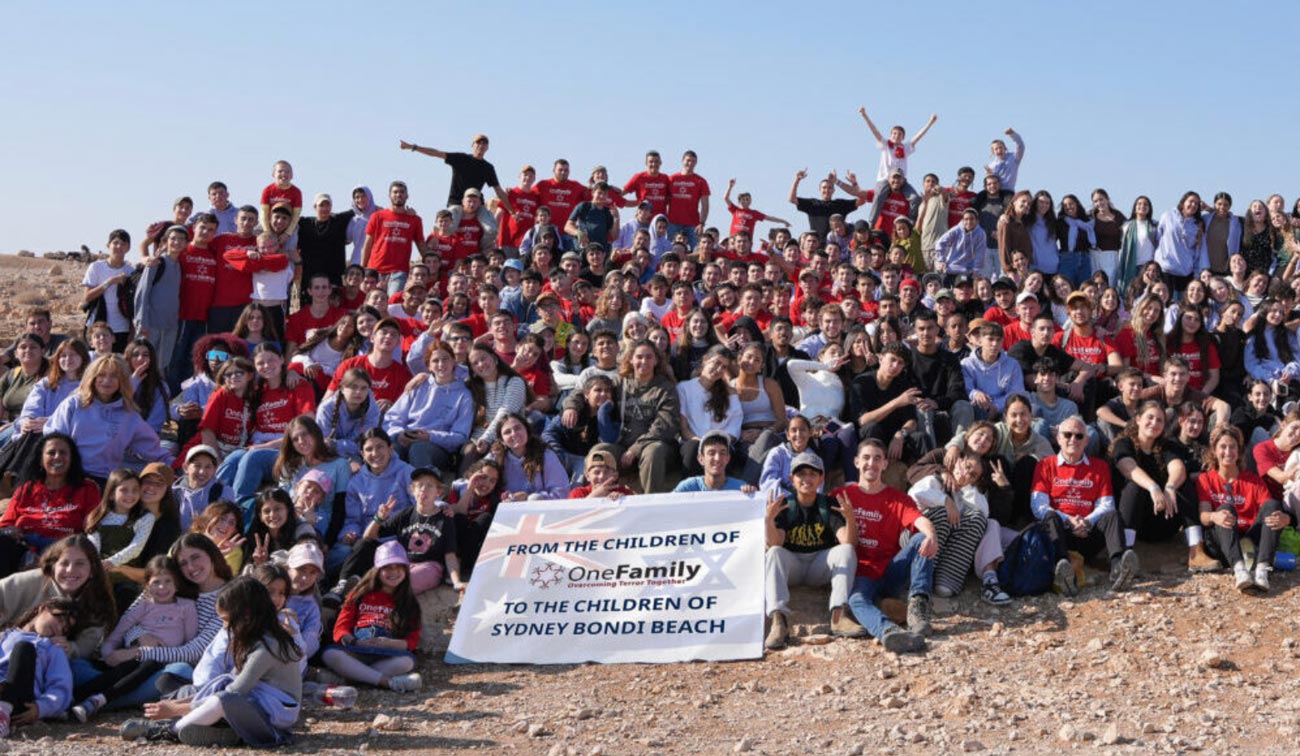
Over 400 bereaved children from across Israel participating in OneFamily’s winter camp send their message of understanding, solidarity and love from atop Masada to the bereaved and injured children and families of Bondi Beach following the December 2025 terror attack.
We all know bereaved individuals who have lost a child, a spouse or a sibling. But what of commanders who lost their soldiers? Reservists who returned home without friends they’ve served with since their teens? Fiancés whose weddings will never take place? What about grandparents who are holding the family together and are crying alone at night? Or adult siblings who run the errands, handle the bureaucracy, plan the funerals and never get asked,“How are you doing?”
This war has changed not only what we’ve lost, but who we are as a grieving people. And it’s made one thing unmistakably clear: grief doesn’t only belong to those with formal titles in an obituary. Grief lives in concentric, overlapping circles. If we’re serious about national recovery, we must widen our lens to include them all.
At OneFamily, we’ve spent the last 24 years walking alongside victims of terror and war. And while every situation is unique, we’ve learned some timeless truths. Healing rarely starts with words. It begins with presence. It begins with being lifted out of routine and into community. It begins when someone realizes they’re not alone — not in their thoughts, not in their anger, not in their silence.
And yet, it’s never as simple as providing one therapy session or a standalone retreat. Grief is stubborn. People don’t always know when or how to ask for help. Many don’t believe their pain is worth addressing. In our experience, it’s older parents who have spent a lifetime providing for everyone else who tend to push their own needs aside. Men, in particular, struggle with this; divorced fathers are often even more isolated. Adult sisters who quietly keep entire families functional may never pause long enough to tend to their own hearts.
OneFamily has always been about more than just “services.” We are about listening — truly listening: identifying new needs, new subgroups and new pathways to healing that didn’t exist before. We didn’t invent programs for adult sisters or bereaved fiancés as part of a strategic plan; we created them because the grieving came to us. They showed us the gaps, who was being missed and the kind of “together” they were craving.
And we made sure to say yes.
The ability to adapt, to meet grief where it actually lives, is what makes our work effective—and what makes it unique. The need is urgent and it’s exploding. Our waiting lists are longer than ever. And still, for every person we serve, we know there are more who haven’t yet reached out. That’s the nature of trauma; it numbs first, and hits later. The wave we’re seeing now is only the beginning.
The good news is that we are not starting from scratch. We know what healing looks like.We’ve seen it. More importantly, we’ve built trust. People know that when they come toOneFamily, they will be seen not just for their pain, but for their potential to heal.
That being said, this moment is different. It’s bigger. It’s national. And it requires something from all of us.
What’s needed is a collective reimagining of what it means to take care of one another after trauma. We need the whole of the Jewish world — not just Israelis, not just professionals, not just donors — to understand that this grief touches us all. It is communal. It is generational. It will either be met with compassion or left to fester in silence.
That’s why I’m asking the entire Jewish world to join us. Not just by funding programs, but byembodying the values that make those programs work. By choosing togetherness over isolation. By checking in on the people who are always checking on others. By being relentless in your kindness and patient with the process.
The path ahead is long. No one should walk it alone. And with your help, no one will have to.
Marc Belzberg is the founder and chairman of OneFamily, Israel’s national organization supporting victims of terror and war through long-term, individualized care and community-based healing.